Walking Alongside Recovery: How to Support a Loved One with Strength and Compassion

28 Feb 2026 Blogs


Recovery: A Lifelong Journey

Recovery: A Lifelong Journey

Recovery is not something that happens immediately but a dynamic process — it entails physical healing, psychological restructuring, social reintegration, and in most cases, spiritual growth. Recovery is about retraining the brain to enjoy natural, healthy rewards again. This means:

  • Learning new coping skills
  • Unlearning harmful behaviors
  • Practicing patience
  • Rebuilding life skills

Recovery is not a quick fix. It is a lifelong journey. Recovery has been generally defined as a process rather than a place. The World Health Organization, the Substance Abuse and Mental Health Services Administration, and the medical community at large stress that recovery is about better health, wellness, and quality of life — not just abstinence. It involves restoring identity, relationships, meaning, and self-efficacy.

Notably, relapse is not always to be considered a failure. Clinically, relapse may be an extension of the recovery process — an indicator of unmet needs, unaddressed triggers, or lack of support systems.

Supporting Someone in Recovery: What Truly Helps?

Helping a person get out of addiction is a massive task but also a significant chance to play a role in bringing permanent change in someone’s life. The quality of support a person receives can have a significant impact on outcomes for those recovering from substance use disorder, behavioral addiction, or co-occurring mental health conditions. A supportive environment minimizes shame and enhances resilience — key protective elements.

1. The Foundation: Compassion Without Enabling

One of the most delicate balances in supporting someone in recovery is distinguishing compassion from enabling. Compassion entails empathy, tolerance, and support. Enabling, conversely, protects the person from the natural consequences of their actions in ways that can inadvertently reinforce addictive behaviors.

Healthy support includes:

  • Encouraging accountability
  • Strengthening interventions
  • Avoiding financial or emotional rescue behaviors that undermine responsibility
  • Supporting professional intervention where needed

Boundaries are not sanctions; they are safeguarding mechanisms that create autonomy and long-term sustainability.

2. Educate Yourself on Addiction

Addiction is a recognized long-term brain disorder involving a distorted reward system, loss of control, and compulsiveness. According to the National Institute on Drug Abuse, prolonged substance use leads to changes in brain circuitry concerned with judgment, stress regulation, and decision-making. Viewing addiction as a health and psychological disorder — rather than a moral failure — reduces stigma and reframes recovery as a health process. As supporters become more informed, they respond with patience rather than frustration.

3. Create a Stable and Trigger-Aware Environment

Recovery outcomes are greatly affected by environmental stability. Supportive individuals can help by:

  • Removing substances or triggering items from shared spaces
  • Avoiding high-risk social environments
  • Encouraging structured daily routines
  • Supporting healthy lifestyle habits such as sleep, exercise, and nutrition

Stress is a high predictor of relapse. Predictability and emotional safety enhance coping capacity and minimize vulnerability.

4. Encourage Professional and Peer Support

Recovery thrives in community. Programs like Alcoholics Anonymous and Narcotics Anonymous offer peer accountability and shared lived experience that can minimize isolation and normalize challenges. Professional assistance — through therapists, psychiatrists, recovery coaches, or outpatient programs — provides structured treatment modalities including cognitive-behavioral therapy (CBT), motivational interviewing, and trauma-informed care. Supporters should encourage and applaud participation in both.

5. Communicate With Intention

Language matters profoundly in recovery. Effective communication includes:

  • Using non-judgmental language
  • Avoiding labels such as “addict” unless the person self-identifies that way
  • Expressing concern using “I” statements (e.g., “I feel worried when…”)
  • Listening more than speaking

Recovery often requires individuals to rebuild self-worth. Conversations that reinforce dignity and capability contribute to identity reconstruction — a core psychological component of sustainable recovery.

6. Rebuild Identity and Purpose

Addiction often reduces a person’s identity to their substance use. Recovery broadens identity toward roles such as parent, professional, student, volunteer, or advocate. Supporters can:

  • Promote learning or professional training
  • Celebrate small milestones
  • Focus on what is working rather than what has gone wrong
  • Encourage meaningful leisure activities and interests

Purpose is a powerful protective factor. Research consistently shows that individuals who perceive meaning in their lives demonstrate stronger resilience and lower relapse rates.

7. Be Ready to Deal With Emotional Swings

Mood swings, irritability, anxiety, and depressive symptoms are common during early recovery. Neurochemical recalibration takes time. Supporters should anticipate emotional variability and avoid taking it personally. Stability is expressed through patience, measured reactions, and consistent presence. When mental health symptoms worsen, encouraging psychiatric assessment or therapeutic intervention is appropriate.

8. Take Care of Yourself

Supporting someone through recovery is emotionally demanding. Burnout, resentment, and compassion fatigue are real risks. Family members and close supporters can benefit from their own support groups or counseling. Groups like Al-Anon offer structured assistance to families of people who struggle with alcohol use. Self-care is not selfish — it sustains the capacity to provide long-term support.

9. Recovery Is Built on Relationship and Connectedness

Fundamentally, recovery is interpersonal. The relational impairments common in addiction can be healed through secure attachment, trust, and consistent support. When a person feels seen, valued, and believed in, hope is more likely to take root. Helping someone through recovery requires courage, boundaries, compassion, and persistence. It means creating space for both accountability and grace.

While the journey may include setbacks, a stable support system dramatically increases the probability of long-term recovery and renewed life direction.

You are more than your addiction, and your future is still worth investing in.


Addiction & Recovery: Why It’s Not “Just Stop” And How We Can Truly Support Healing

25 Feb 2026 Blogs

Shared by our Consultant Psychologist and Addiction Counselor at Outspan Serenity Centre (OSC) – January 2026

“All you need to do is stop…” is a myth.

Addiction is not about weak willpower. And recovery is not instant. It is a process of healing, unlearning, and rebuilding.

Let’s break it down in simple terms.

Addiction Does Not Happen Overnight

No one wakes up addicted. Addiction develops in stages:

  1. Experimentation Phase
    At first, the person feels happy and relaxed. The substance or behavior is associated with positive feelings.
  2. Misuse Phase
    The use becomes more frequent. Negative effects begin to show up in the body and mind.
  3. Abuse Phase
    The consequences grow bigger:

    • Strained relationships
    • Poor performance at work or school
    • Daily or binge use
    • Increased quantity
  4. Addiction Phase
    At this point:

    • The person cannot function without the substance
    • All areas of life are affected
    • The substance becomes a priority

Addiction builds over time. That means recovery also takes time.

Why Addiction Is So Powerful: The Hijacked Brain

All human behavior is driven by two things:

  • Avoiding pain
  • Seeking pleasure

Our brains naturally reward healthy behaviors—like exercising or achieving goals—with feel-good chemicals such as dopamine. These chemicals make us feel satisfied and fulfilled.

But drugs and alcohol interfere with this system.

They flood the brain with pleasure much faster and more intensely than natural rewards. Over time, the brain becomes “rewired.” It starts believing the substance is the most important source of pleasure.

Eventually:

  • Nothing else feels enjoyable
  • The person feels anxious or stressed without the substance
  • Withdrawal symptoms make quitting extremely difficult

This is what we call a hijacked brain.

Addiction shifts priorities completely. People may lie, steal, or manipulate—not because they are bad, but because their brain is wired to prioritize survival of the addiction.

Dr. Jane Fualal Odubu Visits Outspan Hospital on Courtesy Call

26 Nov 2025 News Updates

Outspan Hospital was honoured to host Dr. Jane Fualal Odubu, a distinguished Senior Consultant Surgeon from Uganda and Past President of the College of Surgeons of East, Central and Southern Africa (COSECSA), during a courtesy visit to the institution.

Dr. Fualal, a renowned breast and endocrine surgeon with extensive experience in surgical leadership and training across the region, met with the hospital’s executive team, surgical faculty, and residents. The visit aimed to strengthen professional ties, exchange insights on surgical training, and explore opportunities for future collaboration between Outspan Hospital and regional training institutions.

During her visit, Dr. Fualal commended the hospital’s ongoing commitment to quality surgical education, clinical excellence, and adherence to COSECSA training standards. Her engagement provided valuable perspectives on advancing surgical practice, improving patient care, and enhancing residency training within the East African region.

Outspan Hospital appreciates Dr. Fualal’s time, expertise, and dedication to improving surgical services across Africa. The institution looks forward to continued collaboration and shared initiatives that uplift surgical capacity and healthcare delivery.

Commission of University Education 2nd inspection is conducted at the proposed Outspan Global University

30 Sep 2025 News Updates

The Commission for University Education (CUE) conducted its second inspection of the proposed Outspan Global University on the 29 th of September 2025, marking another important step toward the institution’s accreditation journey. This visit focused on assessing academic resources and infrastructure essential for delivering high-quality healthcare training and education.

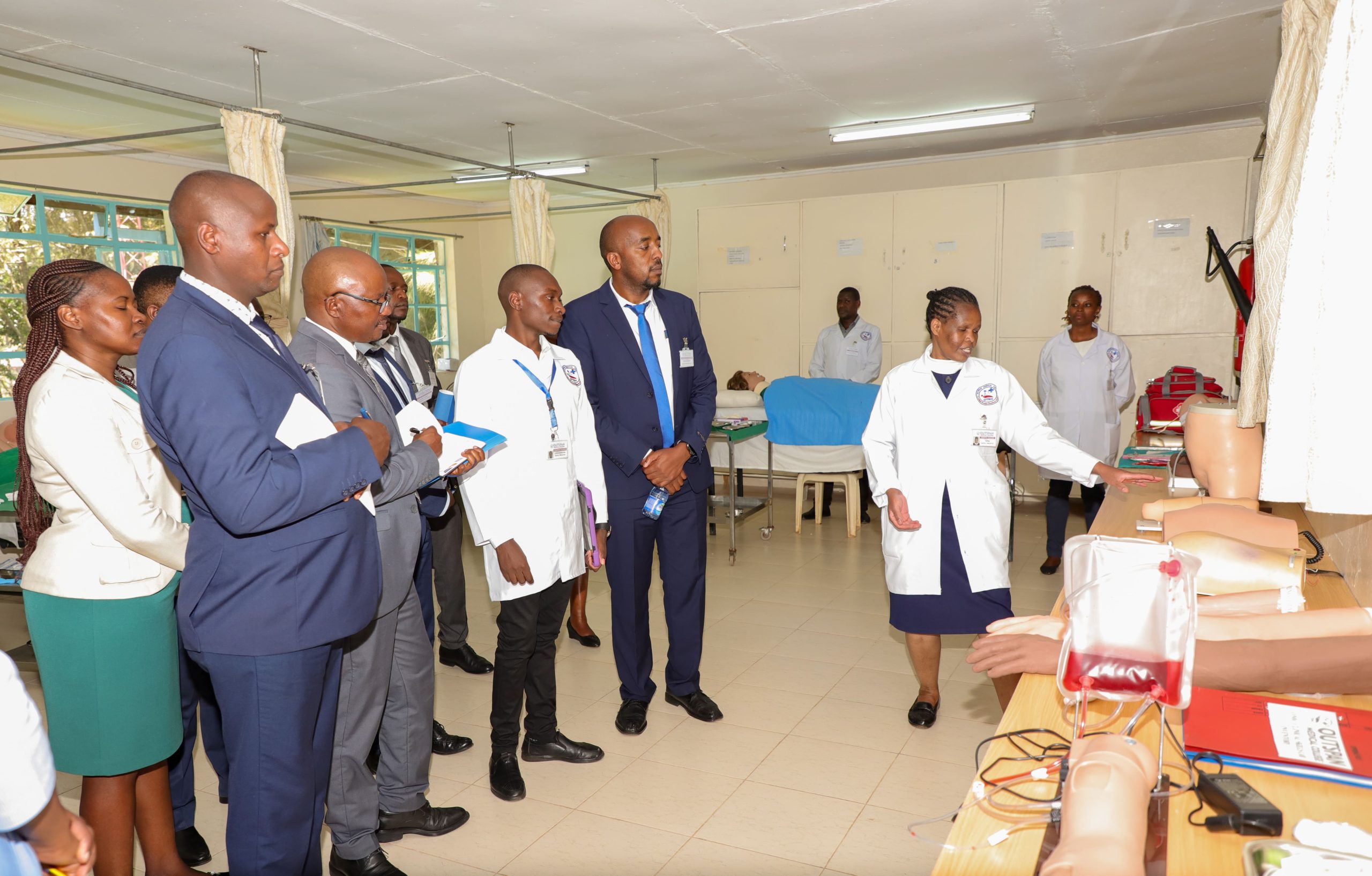
During the visit, the CUE team engaged with relevant academic departments offering the proposed initial programs and carried out a detailed inspection of the facilities. Particular attention was given to the skills laboratories, library, and resource centers. The team also toured the Annex campus, which is housed at the Outspan Teaching and Referral Hospital and our mental health and rehabilitation facility, the Outspan Serenity Centre.

The inspection aligns with the university’s vision of becoming a global reference point for service-oriented training. The team was received by the Executive Director, Dr. G. M. Kiruhi; Professor Mbugua; the Principal of Outspan Medical College, Dr. Lydia Muthoni; and members of the academic leadership.

The deliberations were collaborative, with the CUE team identifying areas for improvement while commending progress made. The management, in turn, expressed appreciation for the feedback, acknowledging that it will play a vital role in strengthening infrastructure and addressing gaps to deliver on the institution’s promise.

In his closing remarks, Dr. Kiruhi thanked the CUE inspection team for their professionalism and diligence. He emphasized that the constructive partnership established since the first visit will enable the proposed university to fulfill its higher calling: to serve God by serving humanity.

Empowering Communities by Strengthening Corporate Partnership in the Mt. Kenya Region

25 Sep 2025 News Updates

In the spirit of partnership and collaboration, the Executive Director, Dr. G.M. Kiruhi, the Medical Superintendent, Dr. Peter Murimi and members of the Executive management, warmly received the Absa Bank management and leadership team, led by Mr. Charles Muchene, Board Chairman Absa Bank Kenya PLC. , Mr. Abdi Mohamed, CEO/Managing Director Absa Bank Kenya PLC who paid a courtesy visit to Outspan Hospital on the 23 rd of September 2025, as one of their major stakeholders in the Mt. Kenya region. The Outspan Hospital team expressed appreciation for Absa’s gesture of strengthening ties beyond transactional interactions.

During the visit, Absa leaders emphasized the importance of shared values, pointing out the synergy in customer centricity, innovation, and teamwork. They also expressed a keen interest in meeting the Director to gain insights directly from the founder’s perspective.

Outspan Hospital’s Executive Director, Dr. G. M. Kiruhi, shared his inspiring journey, beginning as a young intern with a vision to create a space where healthcare decisions are made with patient outcomes at the core and effectively implemented. He provided a brief history of the institution’s growth, highlighting not only Outspan Hospital but also its sister institutions, Outspan Medical College and Outspan Serenity Centre.

Absa’s Chairman, Mr. Charles Munene, described Dr. Kiruhi’s story as deeply inspiring and praised the clarity of his vision. He commended Outspan Hospital’s holistic approach to healthcare and underscored Absa’s commitment to meaningful collaboration:

“We are keen on building a relationship and not just maintaining a transactional interaction. We can find areas of interest and convergence for mutual benefit.”
— Mr. Charles Munene, Chairman, Absa Bank Kenya PLC

Mr. Munene further affirmed that Absa is open to supporting causes that align with both institutions’ values and aspirations.

In response, Dr. Kiruhi welcomed the opportunity for partnership, encouraging Absa to broaden its corporate social responsibility (CSR) initiatives, which have largely focused on education, to other areas of community impact.

From the discussions, both parties agreed to explore several areas of collaboration, including:

  • Employee Assistance Programmes: Offering professional counsellors to support staff well-being.
  • Wellness Activities: Providing health talks and ambulance services for community events.
  • Community Outreach: Supporting initiatives such as the upcoming Women’s Day celebration.
  • Financial Empowerment: Equipping staff with financial literacy and empowering women in business.

This partnership marks a new chapter in advancing community empowerment, strengthening healthcare outcomes, and creating sustainable impact in the Mt. Kenya region. The visit highlighted the convergence of shared values, sustainable business and the power of partnership to ensure real benefits for the communities they serve.

Strengthening Partnerships with KUPPET and KNUT Teachers’ Associations

8 Jun 2023 News Updates

Outspan Hospital is a firm believer in the correlation between a healthy teaching workforce and the delivery of high-quality education. We recently welcomed the regional team leaders of the Kenya Union of Post Primary Education Teachers (KUPPET) and the Kenya National Union of Teachers (KNUT). Outspan Hospital is a firm believer in the correlation between a healthy teaching workforce and the delivery of high-quality education. We recently welcomed the regional team leaders of the Kenya Union of Post Primary Education Teachers (KUPPET) and the Kenya National Union of Teachers (KNUT).

This visit marks a significant step in solidifying partnerships with key stakeholders within the Mt. Kenya region, including Nyeri, Meru, Embu, Kirinyaga, Murang’a, Laikipia, and Nyandarua, to provide affordable and wholistic healthcare solutions for all members of our community.

During the visit, fruitful discussions were held with the regional team leaders of KUPPET and KNUT. These conversations revolved around strengthening the existing partnership and exploring ways to provide comprehensive healthcare solutions that are accessible and affordable for teachers within the Mt. Kenya region.

Teachers are an indispensable part of our society, contributing to the education and overall growth of our communities. At Outspan Hospital, we recognize the critical role they play in shaping the minds and futures of our children. By extending our hand in collaboration with teachers’ associations, we aim to ensure that our educators receive the healthcare support they need to excel in their profession.

By working closely with KUPPET and KNUT, Outspan Hospital aims to ensure that teachers have access to affordable healthcare solutions that cover all aspects of their well-being. We understand that teachers often prioritize the needs of their students above their own, and we are dedicated to providing them with the support they deserve.

Outspan Hospital’s commitment extends beyond the teachers’ associations; we are actively engaged in various community outreach programs, health education initiatives, and corporate social responsibility activities aimed at improving the overall health and well-being of the Mt. Kenya region.

As we move forward, we look forward to strengthening our partnerships with KUPPETKNUT, and other key stakeholders within the education sector. Together, we can create a healthier and more prosperous community, where teachers receive the care they deserve, enabling them to continue shaping the future of our nation.

Fostering Strategic Partnership With National Bank – Subsidiary of KCB Group PLC

8 Jun 2023 News Updates

The hospital on Friday 5th May 2023 hosted the Managing Director, National Bank – A subsidiary of KCB Group PLC. The agenda of the meeting was to reinforce the existing strategic partnership that Outspan Hospital has with National Bank as one of its stakeholders within the financial sector. As the leading healthcare provider within the region, fostering partnerships with stakeholders in both the public and private sectors is key.

In the provision of affordable wholistic healthcare, Outspan Hospital together with National Bank, talked about the future of healthcare and the role that Financial Institutions play in obtaining health services. A robust healthcare system is supported by financial institutions who also aid in access to finance and availability of funds, which is a big part of getting treatment.

This discussion is part of the value that Outspan Hospital seeks to add to its patients and stakeholders, by having a grasp of the external environment within which the Hospital operates. An understanding of this environment enables the management and staff at Outspan Hospital know how best to serve the community. We continue to partner with National Bank, by providing our wholistic healthcare solutions to their staff and clients across the region.

Inauguration of the New Reproductive Health Wing and Operating Theatres

24 Jan 2023 News Updates

The Outspan Teaching and Referral Hospital launched its newly refurbished Reproductive Health Wing and operating theatres on Friday 8th July 2022. The event was presided over by Hon. Lewis Nguyai, Chairman of the NHIF board.

The main highlight was the unveiling of the reproductive health wing, which has been scaled up to include a dedicated Neonatal Intensive Care Unit (NICU), the first in the region; and a High Dependency Unit (HDU) for high risk reproductive health cases. These specialized services will ensure that the wing can handle the critical care cases for both mothers and newborns.

The Outspan Hospital also launched its renovated operating theatres. The hospital now has six major operating theatres and four special theatre to handle all surgical, dental and eye cases. All the theatres are state of the art and fully equipped. Executive Director, Dr. Godfrey Kiruhi said the inauguration of the new reproductive health wing and theatres is in line with Outspan Hospital’s commitment as an ISO 9001:2015, to maintain the highest quality in its service delivery.

The event brought together different stakeholders including representatives of the health ministry in Nyeri county, various corporate clients and staff members from the various departments.

Launch of the Accident and Emergency Centre

28 Sep 2021 News Updates

The Outspan Teaching and Referral Hospital’s Accident and Emergency Centre is the first stop for medical cases needing immediate attention and is primed to handle any arising medical emergencies. The Accident and Emergency Centre is compliant to the International standards of emergency, trauma and life support, which have shaped the hospital’s speedy response to incidents, accidents and disasters. It is conveniently located at the main entrance of the hospital, and is manned by a specialist in emergency medicine providing services 24 hours a day, 7 days a week.

A well laid out emergency preparedness plan coupled with well – equipped staff makes our A&E a One- stop Centre able to handle mass accidents, acute cardio – respiratory problems, advanced trauma, gunshots, disaster management, poisons and other outpatient cases. The department comprises of a motivated team of doctors, nurses, technicians and other para health professionals and staff who are well trained in basic life support, advanced cardiac life support and advanced trauma support, for adults, children and babies form the sister institution Outspan Medical College. The team also recognizes the need to treat patients with utmost respect and professionalism and go out of their way to ensure that patients are attended to in a timely and effective way before discharge or transfer to inpatient wards. Critical care is provided in the Critical Care Unit (CCU) and the High Dependency Unit (HDU) as a continuum of the emergency care. The medical Superintendent at Outspan Hospital, Dr. P. Murimi, explained that the Centre has all the services needed to attend to emergencies.


“There is a resuscitation room with all the equipment that is needed, including patient monitors, emergency medications, emergency equipment, vacuum, and piped oxygen. Basically it is like a mini HDU offering Laboratory, theatre, imaging, Intensive Care Unit (ICU), HDU and pharmaceutical services.” Dr. Murimi added. The A&E facilities are equipped with state – of – the – art equipment including the now new MRI centre with an advanced MRI machine.


Outspan Hospital is proud to have all specialists in the medical field available to cater for any emergency a patient may have. The specialists include; neurosurgeons, neurologists, physicians, pediatricians, gynecologists, cardiologists, general surgeons and plastic surgeons. Our Advanced Cardiac Life Support (ACLS) and Basic Life Support (BLS) ambulances are available 24 hours, 7 days a week and respond to all emergency calls. “The ambulance is well prepared and well equipped to receive the patient and a nurse is always dispatched with the ambulance. Depending on the emergency, a doctor or even an anesthetist may also be dispatched,” says Dr Murimi.

At the Outspan Hospital, personalized patient care is what sets us apart. Expert physician specialists and professional caring staff provide you with an exceptional health experience.

Outspan Hospital earns ISO Accreditation for Laboratory Services

28 Sep 2021 News Updates

Outspan Hospital has earned the highly coveted International Organisation for Standardisation (ISO) accreditation for their laboratory services from Kenya Accreditation Service (KENAS). This achievement was made possible after years of hard work to provide high quality tests for patients’ diagnosis at the Outspan Hospital. Outspan Hospital Director of Laboratory Services Silas Muguongo has been at the institution since it was established in 2001. The process of attaining the ISO accreditation kicked off in 2019, and after a rigorous and highly audited process, the hospital now has 72 percent of the tests offered, accredited. Outspan Hospital Laboratory Department Manager George Kingori said 56 out of the 73 tests available at the facility are ISO accredited which is favourable rating. “The facility has a competent staff of 10 technologists and two technicians and we ensure that every test sample meets the highest standards,” he noted. He said that staff feel satisfied, motivated and proud to be working in an ISO accredited laboratory.

The lab’s key clients are the clinicians who interpret the results to the patients, and the department maintain clear communications in their results. “We go the extra mile in presenting results by offering reference figures and ranges that make it easier for both the patient and the doctor to interpret the results,” Kingori said. Mr Mugungo said it was a lifelong dream come true for him as a career lab technician. “Every test undergoes a standard operating procedure with well-maintained equipment, by competent personnel with the right reagents and in a controlled environment,” he noted. He reiterated that accreditation involves a third party’s assessment that the lab has certain qualities. For patients, in need of a diagnosis, they need answers from their doctor who relies on accurate tests and test results to point them to an accurate assessment of a patient.

“When a lab is ISO accredited, it means that all the tests undertaken have now been recognised as meeting international standards,” he said. The value of this accreditation is that it offers quality results for clinicians to make the right diagnosis. ISO accreditation also ensures that there is rational use of resources as the testing is faster which saves the patient time. There is also reduced chances of misdiagnosis because it is faster and reliable testing. Tests also become accessible and affordable to patients. “This accreditation also lowers the cost of doing business for the hospital, because there is no trial and error because you are guided by the ISO standards,” he noted.

Further he stated, that laboratory setting, reagents, equipment and personnel must use the same standards. “The standards are the same across the globe, that is an assurance to the patients that they are getting quality internationally recognised standards,” he said. He however maintained that even without accreditation the hospital still maintained the highest quality in their testing. The ISO accreditation has an external appeal, and the high quality of services differentiates the institutions from others in Central Kenya Region. “This is in line with our vision as a hospital to become a global reference hospital providing affordable holistic healthcare solutions,” he said.

He noted, the process took time, resources and efforts from the staff and management. The ISO accreditation comes with a responsibility to maintain the standards awarded as the hospital will frequently be audited to ensure they retain the accreditation. For the ISO accredited tests are the commonly used tests, and even those not accredited are still conducted with the highest standards possible.

“We are updated our microbiology department for instance if you come for blood culture tests, you can get your results in under 2 hrs,” he said. In Central Kenyan there are only a few hospitals that are ISO accredited and most have under gone stepwise accreditation which is systemic, as opposed to the Outspan Hospital that was a once off accreditation. “We were mentored by a German firm- Chemlabs who have been our partners since 2001, and we have grown from our infancy as an institution. This team comprises of medical lab technologists who understand how to articulate issues,” he said.

He attributed the support and goodwill from the management who have remained steady and supportive in attaining the ISO Accreditation. Mugungo said the Laboratory is the most important department in the hospital because it differentiates a doctor and a witchdoctor. “The laboratory play a big role in proper diagnosis because the doctors will not guess their diagnosis but rely on scientific results to come to a conclusion,” he noted.

He noted the government would save millions in the health sector if they invested in the laboratory services. Mugungo said accurate and accessible testing assists in detection of diseases such as cancers in the early stages at Health centres and dispensaries that would save lives and ease management of these conditions.

Laboratory services would also help in stocking the necessary drugs based on the results of tests conducted in the health facilities. Lab technicians also play a key role in disease surveillance which their key function as they can inform on how to curb and control the spread. “Laboratory services also play a key role in pathology and forensics as they can detect disease loads in certain areas and also determine cause of death through tests,” he noted.

1 2

Search

+