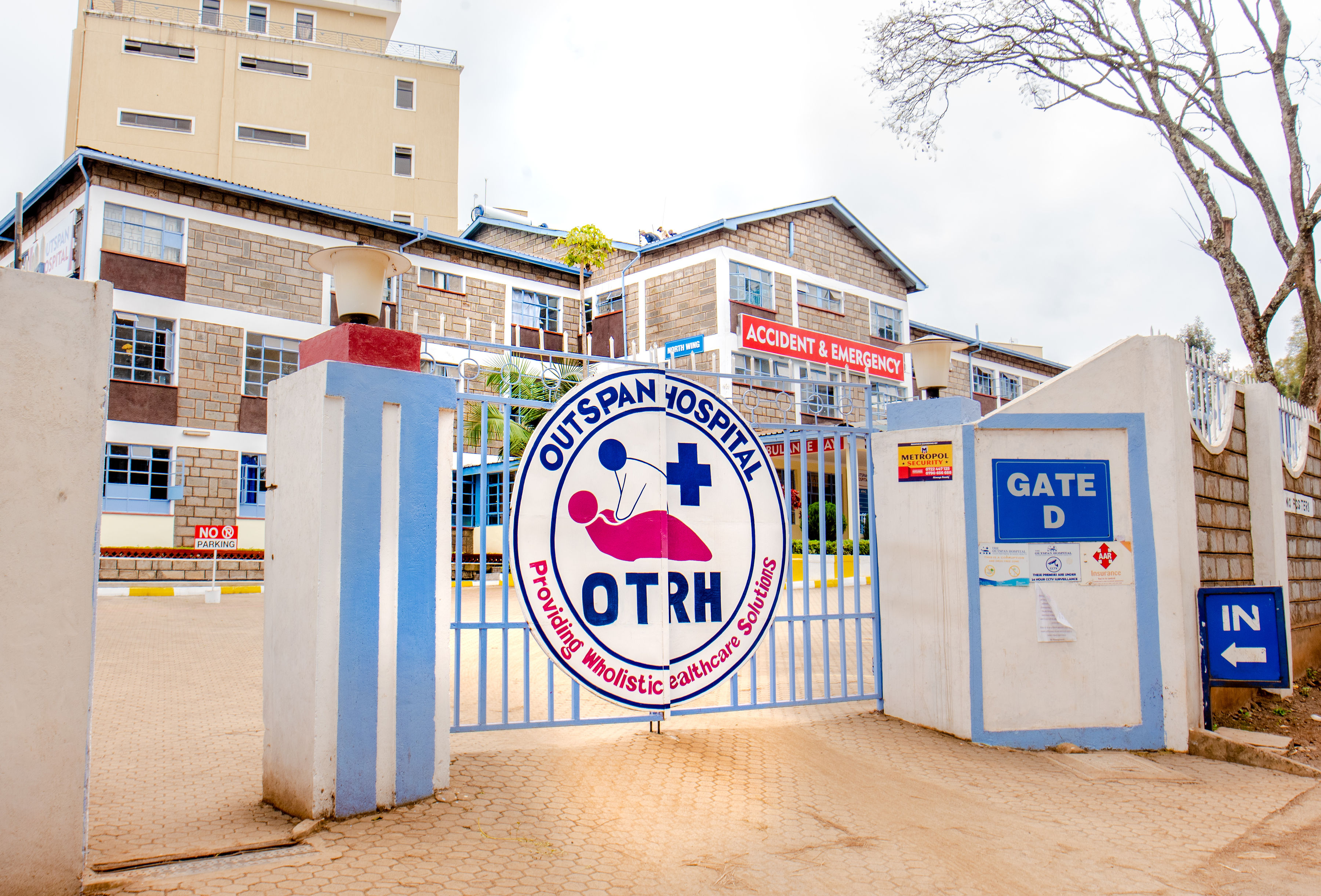
Launch of the Accident and Emergency Centre

28 Sep 2021 News Updates

The Outspan Teaching and Referral Hospital’s Accident and Emergency Centre is the first stop for medical cases needing immediate attention and is primed to handle any arising medical emergencies. The Accident and Emergency Centre is compliant to the International standards of emergency, trauma and life support, which have shaped the hospital’s speedy response to incidents, accidents and disasters. It is conveniently located at the main entrance of the hospital, and is manned by a specialist in emergency medicine providing services 24 hours a day, 7 days a week.

A well laid out emergency preparedness plan coupled with well – equipped staff makes our A&E a One- stop Centre able to handle mass accidents, acute cardio – respiratory problems, advanced trauma, gunshots, disaster management, poisons and other outpatient cases. The department comprises of a motivated team of doctors, nurses, technicians and other para health professionals and staff who are well trained in basic life support, advanced cardiac life support and advanced trauma support, for adults, children and babies form the sister institution Outspan Medical College. The team also recognizes the need to treat patients with utmost respect and professionalism and go out of their way to ensure that patients are attended to in a timely and effective way before discharge or transfer to inpatient wards. Critical care is provided in the Critical Care Unit (CCU) and the High Dependency Unit (HDU) as a continuum of the emergency care. The medical Superintendent at Outspan Hospital, Dr. P. Murimi, explained that the Centre has all the services needed to attend to emergencies.


“There is a resuscitation room with all the equipment that is needed, including patient monitors, emergency medications, emergency equipment, vacuum, and piped oxygen. Basically it is like a mini HDU offering Laboratory, theatre, imaging, Intensive Care Unit (ICU), HDU and pharmaceutical services.” Dr. Murimi added. The A&E facilities are equipped with state – of – the – art equipment including the now new MRI centre with an advanced MRI machine.


Outspan Hospital is proud to have all specialists in the medical field available to cater for any emergency a patient may have. The specialists include; neurosurgeons, neurologists, physicians, pediatricians, gynecologists, cardiologists, general surgeons and plastic surgeons. Our Advanced Cardiac Life Support (ACLS) and Basic Life Support (BLS) ambulances are available 24 hours, 7 days a week and respond to all emergency calls. “The ambulance is well prepared and well equipped to receive the patient and a nurse is always dispatched with the ambulance. Depending on the emergency, a doctor or even an anesthetist may also be dispatched,” says Dr Murimi.

At the Outspan Hospital, personalized patient care is what sets us apart. Expert physician specialists and professional caring staff provide you with an exceptional health experience.
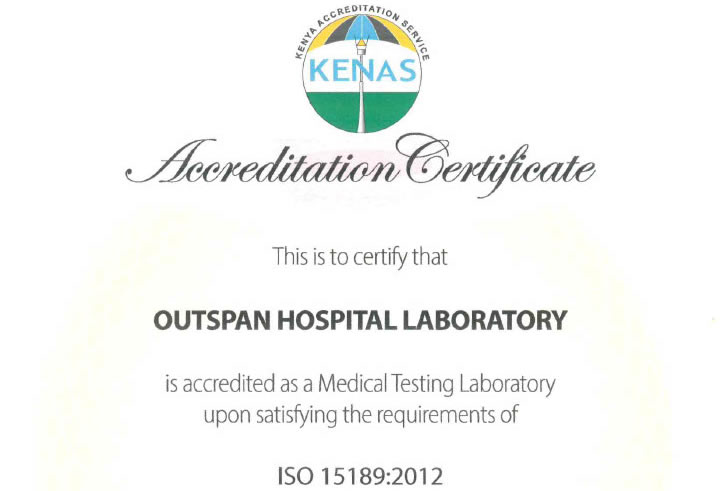
Outspan Hospital earns ISO Accreditation for Laboratory Services

28 Sep 2021 News Updates

Outspan Hospital has earned the highly coveted International Organisation for Standardisation (ISO) accreditation for their laboratory services from Kenya Accreditation Service (KENAS). This achievement was made possible after years of hard work to provide high quality tests for patients’ diagnosis at the Outspan Hospital. Outspan Hospital Director of Laboratory Services Silas Muguongo has been at the institution since it was established in 2001. The process of attaining the ISO accreditation kicked off in 2019, and after a rigorous and highly audited process, the hospital now has 72 percent of the tests offered, accredited. Outspan Hospital Laboratory Department Manager George Kingori said 56 out of the 73 tests available at the facility are ISO accredited which is favourable rating. “The facility has a competent staff of 10 technologists and two technicians and we ensure that every test sample meets the highest standards,” he noted. He said that staff feel satisfied, motivated and proud to be working in an ISO accredited laboratory.

The lab’s key clients are the clinicians who interpret the results to the patients, and the department maintain clear communications in their results. “We go the extra mile in presenting results by offering reference figures and ranges that make it easier for both the patient and the doctor to interpret the results,” Kingori said. Mr Mugungo said it was a lifelong dream come true for him as a career lab technician. “Every test undergoes a standard operating procedure with well-maintained equipment, by competent personnel with the right reagents and in a controlled environment,” he noted. He reiterated that accreditation involves a third party’s assessment that the lab has certain qualities. For patients, in need of a diagnosis, they need answers from their doctor who relies on accurate tests and test results to point them to an accurate assessment of a patient.

“When a lab is ISO accredited, it means that all the tests undertaken have now been recognised as meeting international standards,” he said. The value of this accreditation is that it offers quality results for clinicians to make the right diagnosis. ISO accreditation also ensures that there is rational use of resources as the testing is faster which saves the patient time. There is also reduced chances of misdiagnosis because it is faster and reliable testing. Tests also become accessible and affordable to patients. “This accreditation also lowers the cost of doing business for the hospital, because there is no trial and error because you are guided by the ISO standards,” he noted.

Further he stated, that laboratory setting, reagents, equipment and personnel must use the same standards. “The standards are the same across the globe, that is an assurance to the patients that they are getting quality internationally recognised standards,” he said. He however maintained that even without accreditation the hospital still maintained the highest quality in their testing. The ISO accreditation has an external appeal, and the high quality of services differentiates the institutions from others in Central Kenya Region. “This is in line with our vision as a hospital to become a global reference hospital providing affordable holistic healthcare solutions,” he said.

He noted, the process took time, resources and efforts from the staff and management. The ISO accreditation comes with a responsibility to maintain the standards awarded as the hospital will frequently be audited to ensure they retain the accreditation. For the ISO accredited tests are the commonly used tests, and even those not accredited are still conducted with the highest standards possible.

“We are updated our microbiology department for instance if you come for blood culture tests, you can get your results in under 2 hrs,” he said. In Central Kenyan there are only a few hospitals that are ISO accredited and most have under gone stepwise accreditation which is systemic, as opposed to the Outspan Hospital that was a once off accreditation. “We were mentored by a German firm- Chemlabs who have been our partners since 2001, and we have grown from our infancy as an institution. This team comprises of medical lab technologists who understand how to articulate issues,” he said.

He attributed the support and goodwill from the management who have remained steady and supportive in attaining the ISO Accreditation. Mugungo said the Laboratory is the most important department in the hospital because it differentiates a doctor and a witchdoctor. “The laboratory play a big role in proper diagnosis because the doctors will not guess their diagnosis but rely on scientific results to come to a conclusion,” he noted.

He noted the government would save millions in the health sector if they invested in the laboratory services. Mugungo said accurate and accessible testing assists in detection of diseases such as cancers in the early stages at Health centres and dispensaries that would save lives and ease management of these conditions.

Laboratory services would also help in stocking the necessary drugs based on the results of tests conducted in the health facilities. Lab technicians also play a key role in disease surveillance which their key function as they can inform on how to curb and control the spread. “Laboratory services also play a key role in pathology and forensics as they can detect disease loads in certain areas and also determine cause of death through tests,” he noted.

We are now Level 5

7 Sep 2021 News Updates

The Outspan Hospital has now been upgraded to level five status. This was announced by the hospital Executive Director Dr. G. M.Kiruhi .  While addressing the hospital staff, the director said that the Kenya Medical and Dentist Council had approved that the hospital had attained the required criteria and will now be known as Outspan Teaching and Referral Hospital and has been upgraded to level five. With the upgrade the Director said that staff should ensure that the hospital continues to be the leader in the region and not to forget that to be on the top is easy but maintaining it is a difficult a task. “So let’s all keep our focus until we get to our dream of becoming a global reference institution that provides quality, affordable and wholistic Healthcare Services to all in this country and beyond.”

“What remains now is the registration and issuing of a license by the KMDC to confirm the hospital status officially” This is according to the Chief health Administrative Officer at Outspan Teaching and Referral Hospital Mr. Jack Kihumba.

1 2

Search

+